
The best kids’ bikes for Christmas aren’t necessarily the ones with the biggest wheels or most room to grow. Start with your child’s height and inseam, then use age and wheel size as a guide: a 12-inch bike is suggested for ages 2-3 and heights of 2’10”-3’4”, while a 16-inch bike is suggested for ages 4-5 and heights of 3’7”-4’0”.
It’s easy to focus on the excitement of unwrapping a new bike, but a comfortable fit matters just as much as the surprise. A child who can manage their bike confidently is more likely to enjoy learning and riding, so choosing by age alone can make it harder to pick the right size.
This guide explains how to match a bike to your child’s height and age, compare balance bikes, standard bikes, mountain bikes and BMX styles, and consider options for junior riders. You’ll also find key safety features to look for, including a comfortable, properly fitting helmet, to help you choose thoughtfully for Christmas.
Key Takeaways
- Use a child’s measurements alongside age to narrow the size, then consider how confidently they can handle the bike.
- Look beyond the frame: assess the brakes, chain guard and helmet fit as part of a safe setup.
- Match the bike style to the riding your child enjoys, from learning balance to exploring trails or trying BMX.
- For a growing rider, compare junior options by fit and intended use rather than choosing by age alone.
Bike sizing by child height and age
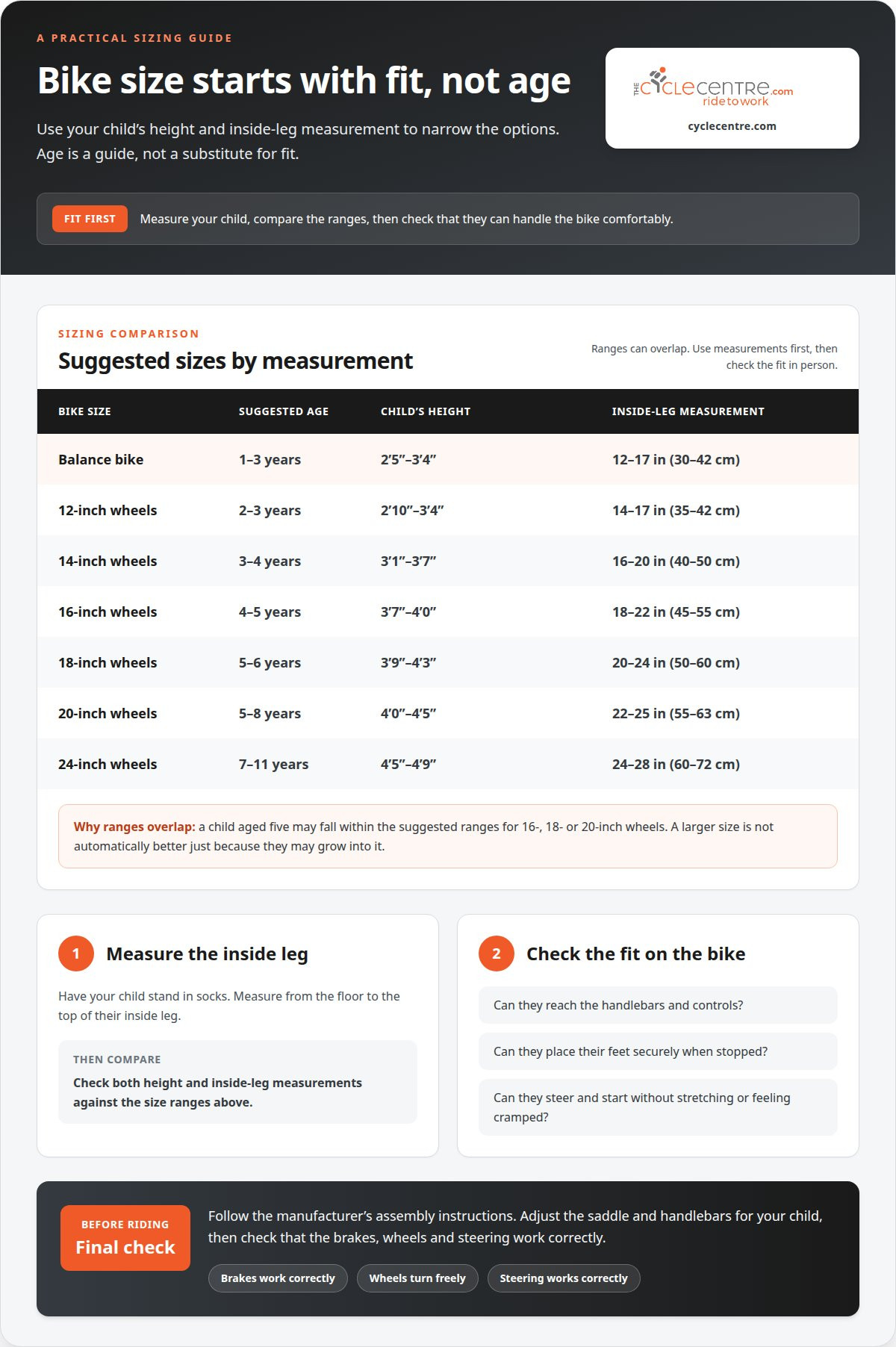
Use height and inside-leg measurements to narrow the options; age is a guide, not a substitute for fit. Measure your child standing in socks, from the floor to the top of their inside leg, then compare both measurements with the size ranges below.
- Balance bike: ages 1-3, height 2’5”-3’4”, inseam 12-17 inches (30-42 cm).
- 12-inch wheels: ages 2-3, height 2’10”-3’4”, inseam 14-17 inches (35-42 cm).
- 14-inch wheels: ages 3-4, height 3’1”-3’7”, inseam 16-20 inches (40-50 cm).
- 16-inch wheels: ages 4-5, height 3’7”-4’0”, inseam 18-22 inches (45-55 cm).
- 18-inch wheels: ages 5-6, height 3’9”-4’3”, inseam 20-24 inches (50-60 cm).
- 20-inch wheels: ages 5-8, height 4’0”-4’5”, inseam 22-25 inches (55-63 cm).
- 24-inch wheels: ages 7-11, height 4’5”-4’9”, inseam 24-28 inches (60-72 cm).
Some ranges overlap. For example, a child aged five may fall within the suggested ranges for 16-inch, 18-inch or 20-inch wheels. Use their measurements first, then consider whether they can manage the bike comfortably. A larger size isn’t automatically a better choice simply because a child may grow into it.
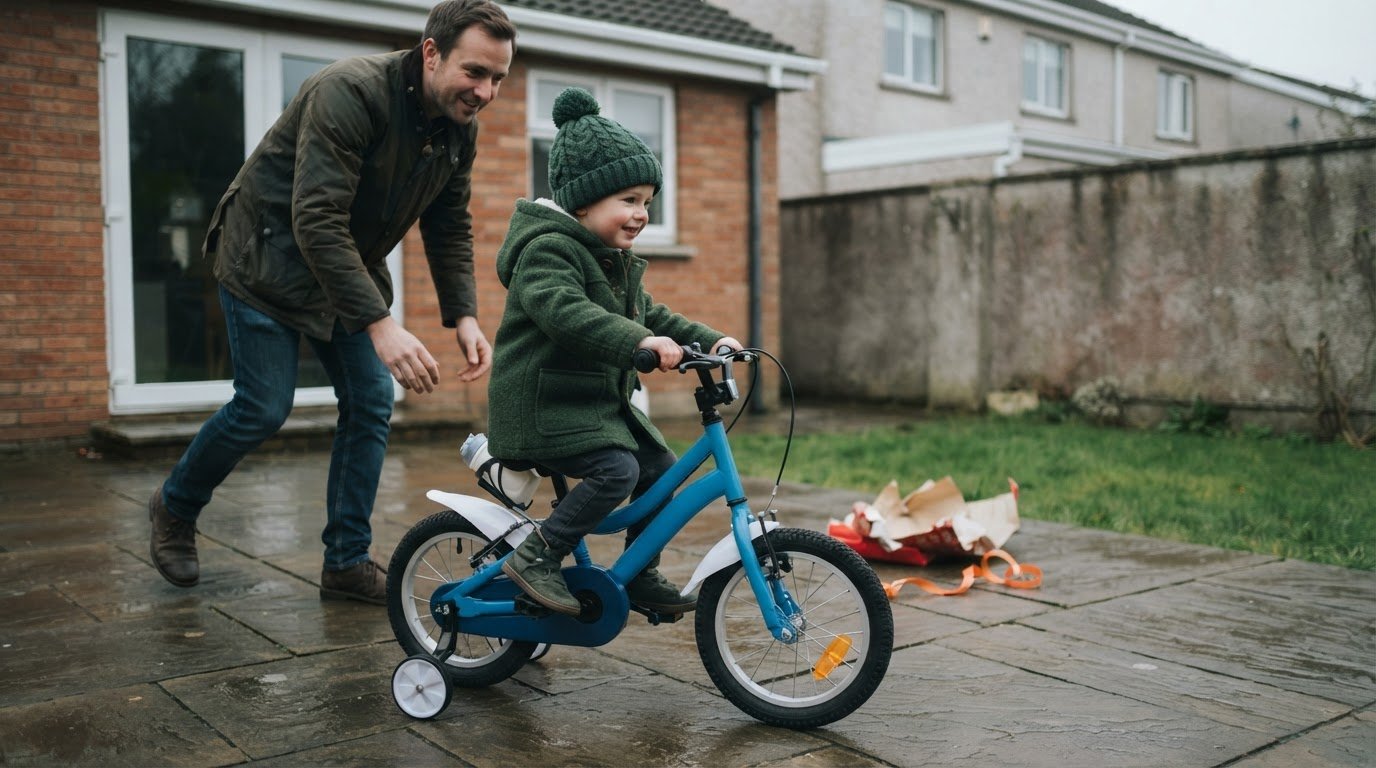
For a practical fit check, have your child sit on the bike and hold the handlebars. They should be able to reach the controls and place their feet securely when stopped. Check that they can steer and start without stretching or feeling cramped.
When assembling the bike after delivery, follow the manufacturer’s instructions and fit each supplied part as directed. Adjust the saddle and handlebars for your child, then check that the brakes, wheels and steering work correctly before riding.
Brakes, chain guards and other safety features
Before your child rides, inspect the controls and moving parts. Check that both brake levers are within reach and operate smoothly. Your child should be able to squeeze each lever without changing their grip. Spin each wheel and apply its brake to see if it slows reliably. If a lever feels loose or a brake rubs, have the bike adjusted before riding.
A chain guard covers the chain near the pedals, helping keep clothing and fingers away from the moving chain. Check that the guard is secure and doesn’t obstruct the pedals. Check the handlebar ends too: the grips should stay in place, with no exposed sharp edges. Tyres should sit evenly on the rims, and the wheels should turn without catching.
- Brakes: test each lever and confirm it slows the correct wheel.
- Chain guard: check that it covers the exposed chain and stays firmly attached.
- Wheels and tyres: look for secure wheels, even tyre seating and unobstructed rotation.
- Helmet: choose one that fits properly and feels comfortable.
In Ireland, prioritise a comfortable, properly fitting helmet for your child. Set it level on their head, with the straps adjusted so it stays secure without pinching. Recheck the fit as your child grows or if the helmet shifts during movement. A helmet that feels uncomfortable may be less likely to stay in position.
Clothing matters around moving parts. Keep loose trouser legs, scarves and dangling straps clear of the chain and wheels. For visibility, choose bright clothing and check that the bike’s reflectors are present and clean. These checks help prepare the bike for supervised practice, especially while your child is learning to brake and steer.
For a correctly fitted helmet and practical riding clothing, explore cycling helmets and apparel. Finish with a short supervised test: check steering, brakes and the child’s reach before setting off.
Children’s bike categories
Choosing kids’ bikes for Christmas starts with where your child will ride. A balance bike suits early practice, while a pedal bike supports outings once they’re ready to pedal. Mountain bikes, BMX bikes and general-purpose models suit different riding preferences. Match the style to your child’s confidence, regular routes and intended use.
A balance bike has no pedals or chain. Children push along with their feet to practise steering and balance. It can suit a beginner who isn’t ready to coordinate pedalling and braking. Once they’re comfortable gliding, a pedal bike introduces those controls and skills.
- First pedal bikes: A straightforward design lets new riders focus on starting, steering and stopping. Training wheels may suit some learners; others prefer practising balance without them.
- Mountain bikes: This style can suit park paths and uneven ground. Consider whether your child will ride on those surfaces, rather than choosing one for appearance alone.
- BMX bikes: A compact style may appeal to children keen to practise BMX riding. It offers a different purpose from a bike chosen mainly for family journeys.
- General-purpose bikes: These can suit everyday cycling on smoother routes. Consider a practical riding position and controls your child can use comfortably.
Some categories overlap. A junior mountain bike may suit everyday rides as well as paths, while a BMX can work for casual cycling too. Think about your child’s usual routes before choosing a style. A bike with features they won’t use may not suit their everyday riding.
For kids’ bikes for Christmas, first identify the main use: learning, local trips, trail riding or BMX practice. Then compare suitable styles by riding position, tyres and controls. If your child rides on mixed surfaces, choose a category suited to those routes. This keeps the decision focused on the cycling they’ll actually enjoy.
Junior bikes
Junior bikes come in several wheel sizes and riding styles. Match the frame and controls to the rider, then consider where they’ll cycle. The examples below show why age, height and intended use all matter when choosing a suitable bike.
- 14-inch balance bike: A model with a built-in footrest is described as suitable from age three. It can suit a child practising balance before moving to pedals.
- 14-inch pedal bike: One kids’ bike weighs approximately 8 kg. A lighter bike may be easier for a young rider to handle, though fit and comfort still matter.
- 16-inch BMX: One BMX model is described as suitable for ages four to seven. Consider this style for a child interested in BMX riding.
- 26-inch junior mountain bike: A model is designed for riders measuring 136-154 cm. This gives a useful height range for comparing junior options.
These examples aren’t interchangeable. A child in the BMX age range may not match the height range for a 26-inch mountain bike. Use the rider’s measurements and experience to narrow the choice, then check the bike’s intended use. Age labels help, but don’t show whether a child can reach the controls comfortably.
For a junior mountain bike, consider whether the rider will use it on paths or uneven ground. For BMX, think about the kind of riding they want to practise. A balance bike with a footrest serves a different purpose from either pedal-bike style. Choose for your child’s current riding rather than buying a larger bike solely to allow for future growth.
Before deciding, compare the stated rider height with your child’s measurements. Have them sit on the bike and reach the handlebars and brake levers. Check that they can start, stop and steer without stretching or feeling crowded. These simple checks help you judge how manageable the bike feels.
Explore kids’ bikes for junior riders to compare options by size and riding style.
The Cycle Centre: Kids bikes
The Cycle Centre offers kids’ bikes for families choosing a first balance bike, a pedal bike or a junior model. Explore the range after considering your child’s measurements, confidence and usual riding routes. These details help narrow the choice between a bike for learning, everyday trips or more adventurous rides.
Use the sizing guidance above to identify a suitable wheel-size range, then compare options with your child’s intended use in mind. A bike suited to their current riding can make practice and family outings more enjoyable. The Cycle Centre also offers Cycle to Work options, which are separate from choosing a child’s bike.
To discuss a kids’ bike, contact The Cycle Centre.
Make their next ride part of the gift
Choosing kids’ bikes for Christmas can be the start of a new family routine, from practising on quiet paths to planning rides together. Involve your child in choosing a style they’ll enjoy, while keeping comfort and confidence central. A bike that feels like theirs can make those first outings more inviting.
The Cycle Centre offers kids’ bikes, alongside Bike to Work, Cycle to Work and Ride to Work. If you’re ready to explore options for a young rider, contact The Cycle Centre for help choosing.
Give them a thoughtful start, then let the adventures grow.
Frequently Asked Questions
What size bike should I buy for a child based on their age and height?
Use your child’s height and inside-leg measurement with the sizing guide, treating age as a secondary guide. If their measurements fall between two ranges, compare the fit on each size rather than automatically choosing the larger bike. Children grow at different rates, so measure again close to purchase time, especially if you’re choosing a Christmas present in advance.
What should I check when choosing a safe, durable children’s bike?
Check the frame for visible damage and make sure the wheels, handlebars and saddle are secure. Test the brakes by walking the bike and squeezing each lever; the wheels should slow as expected. Check that the chain guard is firmly fitted and the tyres sit evenly. A properly fitting helmet should also feel comfortable and stay in place.
Should I buy a balance bike, pedal bike, or kids’ mountain bike?
Choose a balance bike if your child is learning to steer and balance, or a pedal bike if they’re ready to manage pedals and brakes. A kids’ mountain bike can suit a rider who enjoys rougher paths as well as everyday cycling. Think about the routes your family actually rides before choosing a more specialised style.
What are the best kids’ bikes available in Ireland for Christmas 2026?
Choose by your child’s measurements, confidence and intended riding. Options include the Apollo Firechief 12-inch bike, Traverse 16-inch BMX and Carrera Vengeance Junior Mountain 26-inch bike for riders 136-154 cm tall; the best fit depends on the child.
Where can I buy kids’ bikes in Ireland, including online and local retailers?
The Cycle Centre offers kids’ bikes. Contact the team to discuss the options.